TalTech WoodValHUB: Connecting research, industry and policy for wood valorisation in Estonia
The 6th TalTech Summer Seminar on Wood Valorisation brought TalTech researchers together with senior guests from partner universities, government, research-support organisations and the wood sector. Over two days at Oxforell Holiday Centre, the programme connected scientific excellence with the people and conditions needed to turn knowledge into impact.
Held on 18-19 June 2026, the seminar was organised by WoodValHUB, part of TalTech and a connector for the university’s mechanical, chemical, biochemical and analytical wood-valorisation expertise. Most of the speakers were TalTech scientists, while the invited guests brought perspectives from the University of Tartu, the Estonian University of Life Sciences, ministries, specialised development organisations and sector associations. The formal industry representation came through the Estonian Forest and Wood Industries Association.
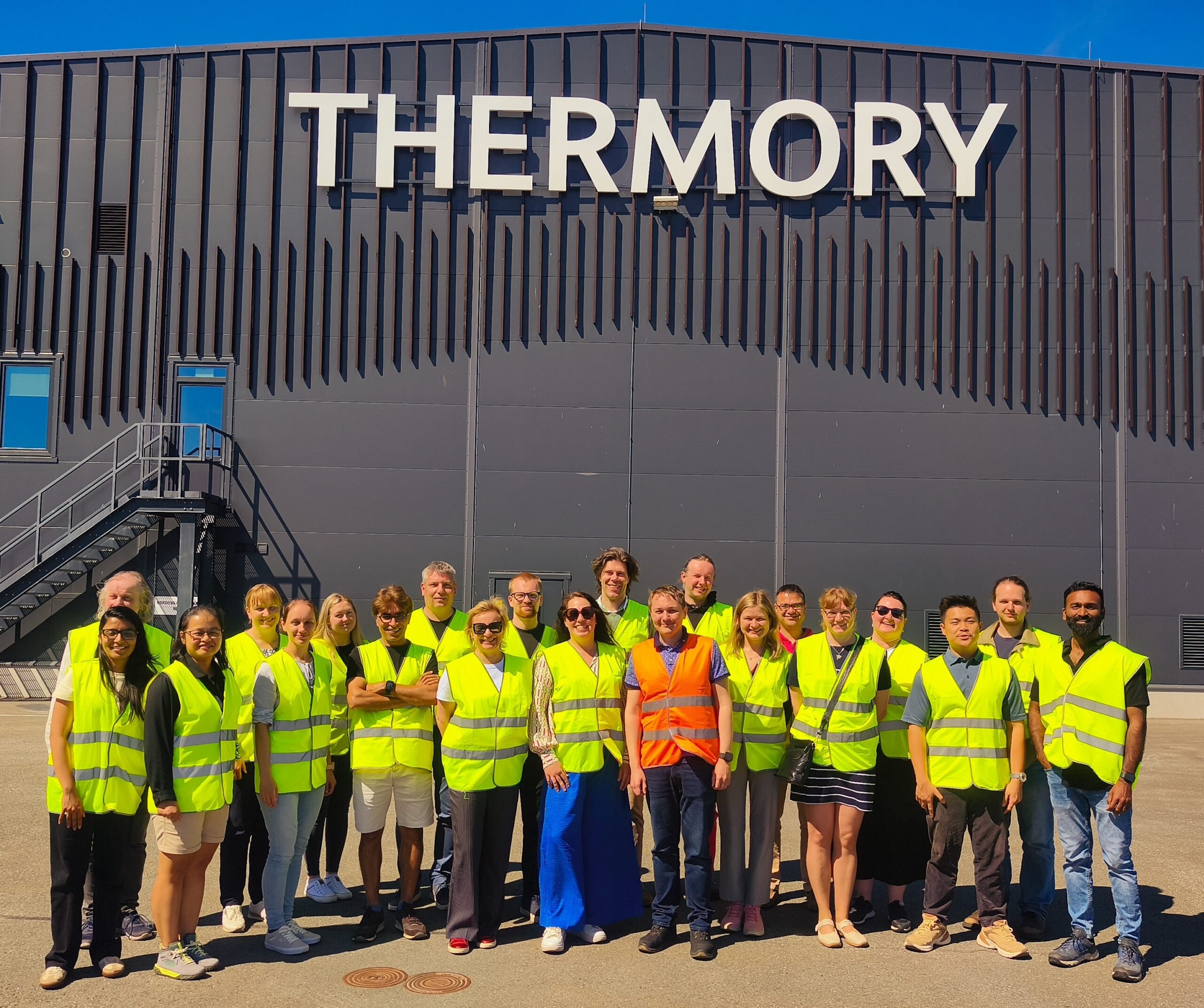
Across five sessions, the programme moved from education, research support and forest policy to timber engineering, cellulose, lignin, fermentation, fibre composites and industrial scale-up. Opening the seminar, TalTech Vice-Rector for Research Jarek Kurnitski placed wood valorisation in the wider green transition. Technology alone, he stressed, is not enough: regulation, political commitment and society’s readiness must develop with it. The programme concluded with a visit to Thermory AS, linking the discussion with production practice.
 Research, policy and the sector at one table
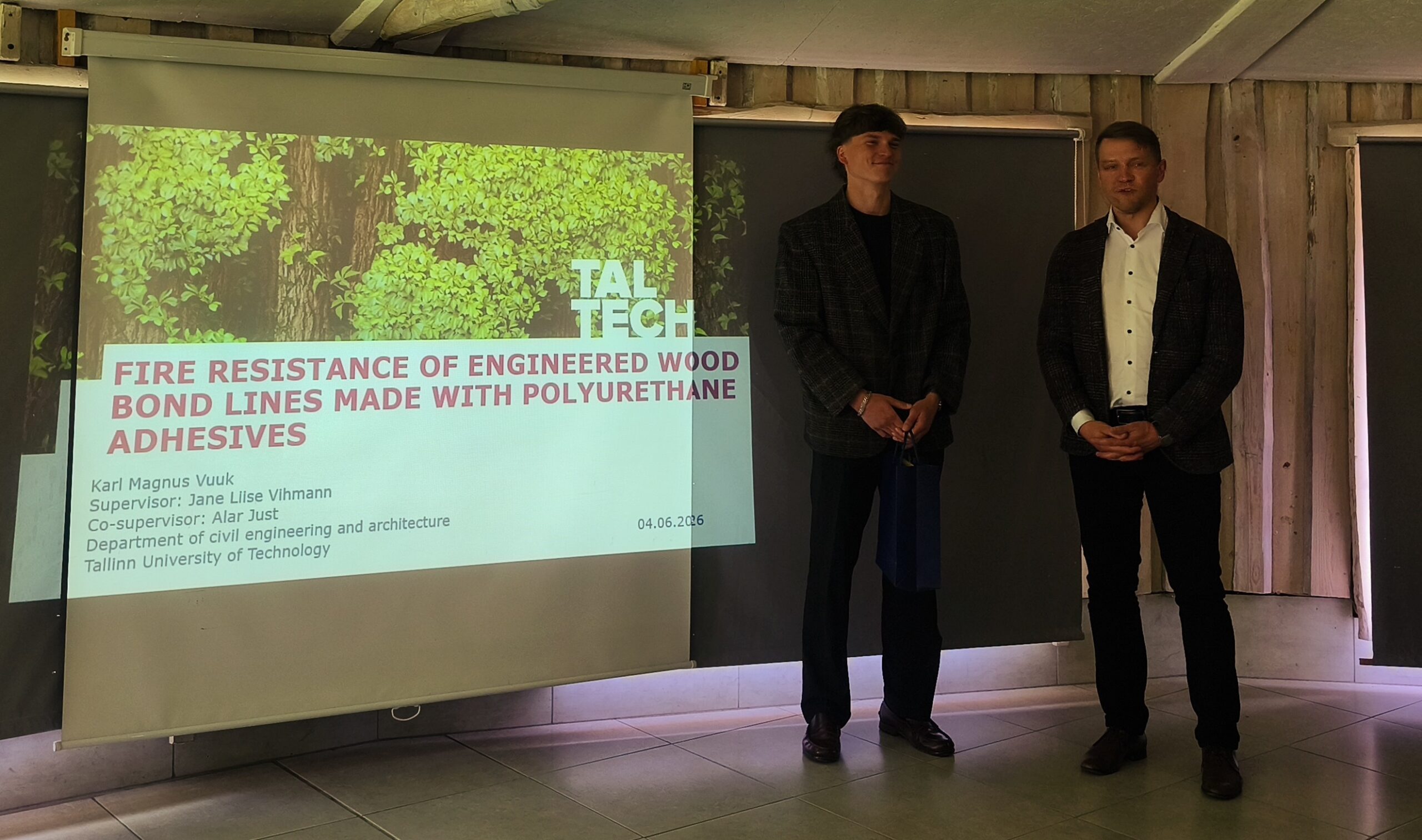
The standing of the invited participants was one of the seminar’s strengths. Before the panel, Henrik Välja, Managing Director of the Estonian Forest and Wood Industries Association, presented the association’s Best Thesis Award to Karl Magnus Vuuk. His thesis, “Fire resistance of engineered wood glue joints made with polyurethane adhesives”, compared cone-calorimeter and furnace testing of bond lines in cross-laminated timber. The award showed how focused university research can address a concrete question for safer timber construction.
Rainis Venta, Head of Innovation at the University of Tartu’s Institute of Bioengineering, introduced and moderated the panel “How to speed up science-based wood valorisation?” His macroeconomic perspective placed productivity and added value at the centre. Estonia has wood, but wood can also be transported elsewhere; the resource alone therefore does not guarantee that investment, production or high-value jobs will remain in Estonia.
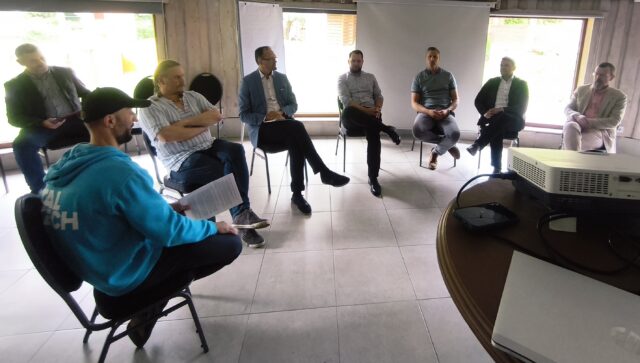 The panel brought key parts of Estonia’s innovation system to the same table: TalTech Researcher-Professor Andres Krumme; Henrik Välja from the Estonian Forest and Wood Industries Association; Marku Lamp, Head of Research and Development Cooperation at the Estonian University of Life Sciences; Mikk Vahtrus, Head of Development in the Department of Innovation and Technology at the Ministry of Economic Affairs and Communications; Renno Veinthal, Deputy Secretary General for research, higher education and adult-education policy at the Ministry of Education and Research; and Siim Salmar, Head of the Chair of Organic Chemistry at the University of Tartu.
The discussion moved beyond the general call for more cooperation. Participants argued for doctoral education that prepares researchers to understand business as well as science; more freedom for researchers to use project resources where they create the greatest value; and regulation that actively supports entrepreneurship, development and the application of new technologies. The central question was not only who should fund innovation, but how universities, ministries and the sector can create enough room for promising ideas to become enterprises and production.
 Different support routes for different stages
TalTech has its own internal support for developing research ideas into fundable and implementable projects. Andrew Rozeik, Project Proposal Writer at the Research Administration Office, described a funding environment in which competition, evaluator expectations and proposal complexity have all increased. The office’s expanding service portfolio covers early concept development and strategic counselling, proposal review, writing selected sections and full proposal support. Its multidisciplinary team also brings experience in business development, financial analysis, project development, management and implementation. The practical message was to involve the team six to twelve months before a deadline, while the concept and pathway to impact can still be strengthened.
Outside TalTech, specialised organisations support different forms of wood valorisation. Jörgen Dobris, Development Manager at TSENTER, the Wood Competence Center, presented a broad practical route for mechanical valorisation. TSENTER helps companies analyse structural solutions, select materials and fittings, prepare technical drawings and 3D models, develop packaging and production technologies, build prototypes, test products and components, and calculate cost prices. It also supports production analysis, optimisation, robotisation and automation.
Its testing and workshop capabilities cover the mechanical and chemical resistance of finished surfaces, outdoor durability, furniture fittings and joints, alongside services such as finishing, laser cutting, CNC machining, 3D printing and product photography. For a company that cannot justify investing in every machine or specialist internally, TSENTER offers a way to test and develop a product at a fraction of the full in-house cost – around one fifth in the example discussed at the seminar. This lowers the entry barrier to experimentation, especially for smaller enterprises.
Jaan Jantson, Technology Expert at Metrosert, presented a complementary route in biochemical valorisation. Wood hydrolysates contain mixed sugars and inhibitors, and their composition varies from batch to batch, so a result achieved in a flask is not yet a reproducible industrial process. Metrosert’s planned open-access biorefinery, expected to operate from 2027, will provide a 50-, 500- and 5,000-litre fermentation cascade with downstream processing under one roof. TSENTER and Metrosert work in different fields – mechanical product development on one side and biochemical or chemical scale-up on the other – but both are dedicated to helping wood-valorisation ideas cross the gap between research and application.
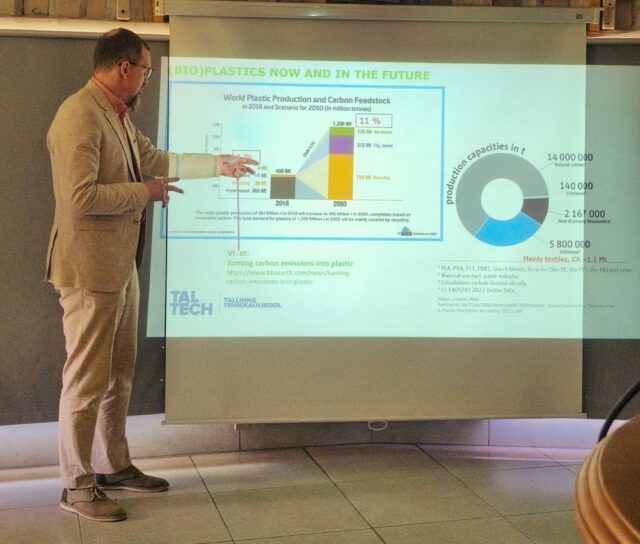 TalTech research across the wood value chain
The scientific programme demonstrated the range of expertise already present at TalTech. In timber engineering, Alar Just presented developments in the use of underused hardwoods and damaged softwood, reclaimed structural timber, production residues, reusable connections and fire-safe engineered wood. Eldwin Maidiono reported preliminary results from mycelium composites made with Estonian hardwood species for thermal insulation. Percy Alao followed with fibre-based value chains from hemp and other biomass grown on marginal land, spanning insulation, automotive composites and bio-concrete from laboratory work to pilot production.
Tiia Plamus presented new directions in TalTech’s Laboratory of Textile Technology, where secondary raw materials and bioresources are being developed for textile applications. Illia Krasnou showed a step-by-step route from R&D towards industry through continuous mechanochemical processing and reactive extrusion. Andres Krumme presented sustainable synthesis routes for fatty-acid cellulose esters, while Andrus Metsala demonstrated how calculations, predictions and computer modelling can reveal what happens during cellulose dissolution and help researchers compare solvent systems at the molecular level.
Lignin research formed another strong cluster. Yevgen Karpichev reviewed chemical and biological routes for converting lignin into functional materials, including the LignoQuat antibacterial textile treatment. Kairit Zovo, presenting work with Ander Erik, examined enzymatic modification of several technical lignins. Kannan Thirumal Muthu showed how soil bacteria can consume lignin-derived aromatic compounds and resin acids. Together, these contributions addressed the chemistry, enzymes and microorganisms needed to turn a complex side stream into higher-value materials and products.
Jaan Kers placed these individual projects in a wider call to prepare for the arrival of a new wood age. His message was that Europe cannot remain at the level of discussion while Asian economies advance the cascade use of wood in practice. Across the scientific sessions, the common thread was application: who would use a material or process, how consistent it could become, what evidence and equipment would be required, and how more of the resulting value could remain in Estonia.
 Bridging institutions – and different professional languages
Piret Jaani, Education Coordinator at the Estonian Woodhouse Association, showed why skills are part of the innovation system. Estonia has led European Union exports of prefabricated timber buildings since 2010, yet the sector struggles to attract young people and to keep education aligned with changing practice. Woodhouse Academy connects education with industry-created learning materials; more than 900 learners have registered and over 400 certificates have been issued.
The University of Tartu contribution showed what cooperation can produce. Siim Salmar presented deep-tech spin-offs as a route for science-based wood valorisation and recalled that a connection made at one of the first WoodValHUB summer seminars helped set in motion the creation of the University of Tartu spin-off Leatherwoods OÜ. The example gave the seminar itself a measurable purpose: the right meeting can become the starting point for a research partnership, a company or an entirely new application.
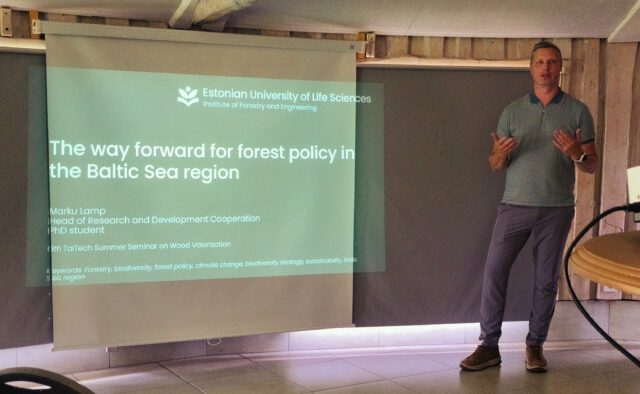 Policy contributions added the conditions around that knowledge. Kristy Parro, Head of the Forestry Department at the Ministry of Climate, presented roadmaps intended to support the development of Estonia’s wood sector and emphasised that innovation concerns the whole process, not merely the substitution of one component. Marku Lamp of the Estonian University of Life Sciences connected wood valorisation to the beginning of the value chain: forest management, resource availability and the need for coherent policy, simpler regulation, better communication and political decisions where legitimate values conflict.
Eve Teppan, TalTech Focus Area Coordinator, described the less visible work required to make such connections possible. Industry and science often speak different languages: companies formulate immediate operational needs, while researchers frame questions through methods, evidence and longer development cycles. A thematic network coordinator translates in both directions, allowing researchers and sector specialists to focus on what they do best. Viktoria Gudkova, WoodValHUB Development Manager, placed that bridging role in the HUB’s wider progress and next steps.
A research-led forum with a practical purpose
The sixth edition of the summer seminar brought together TalTech scientists and distinguished guests from partner universities, ministries, research-support organisations and wood-sector associations. Their combined perspectives allowed participants to examine wood valorisation as a connected system – from research and education to policy, funding, scale-up and application.
The seminar’s clearest conclusion was that Estonia’s advantage cannot rest on the availability of wood alone. It must be built from strong research, people who can communicate across institutional boundaries, supportive regulation, freedom to develop and apply technology, accessible project and pilot infrastructure, and pathways from a scientific result to entrepreneurship. WoodValHUB’s role inside TalTech is to keep those capabilities connected – and to create the meetings from which the next partnership, pilot or spin-off can grow.
Interested in research, testing or industrial collaboration? Explore WoodValHUB’s competencies and facilities or contact the HUB at woodval@taltech.ee.
Program of 6th TalTech Summer Seminar on Wood Valorisation